Practice Before Theory
Notes, working essays, and deep dives on building intelligent organizations — sent a couple times a week. Published here as notes, essays, and features — and delivered via beehiiv ↗.
Showing 38 of 38 dispatches
-
-
How AI in November 2026
Draft. Off the laptop into cloud orbs, three people to follow on harness and craft, and domain-specific harnesses over model cards.
-
Where A2A Begins and Ends
A2A hit v1.0 in April, and MCP's extension catalog made the two protocols look alike on paper. The actual boundary is stance: compose a transparent workbench, or delegate to an opaque peer.
-
Agents Get a UI
MCP was the USB port for agents. The 2026-07-28 revision gives that port a screen, with host-mediated widgets in the chat, plus extensions for tasks, auth, and whatever comes next.
-
mattpocock/skills v1.1: coding with alignment surfaces
The v1.1 release is useful because it turns agent coding into a loop we can share: align, spec, ticket, build, verify — with Wayfinder for work too foggy for one session.
-
Introducing Labs
There's so much to talk about that we need a better home for it — quarterly issues, clear lanes, and a place to look back without drowning in the archive.
-
What Surprised Us at the World's Fair
We read all 92 talk transcripts from the AI Engineer World's Fair 2026. The main report: what genuinely surprised us — with clips.
-
How AI in May 2026
Five months after the last update, almost every choice has shifted. Multi-model is the default, open weights showed up, the harness is open, and the coding agent is now a native part of the software process.
-
Neural harness
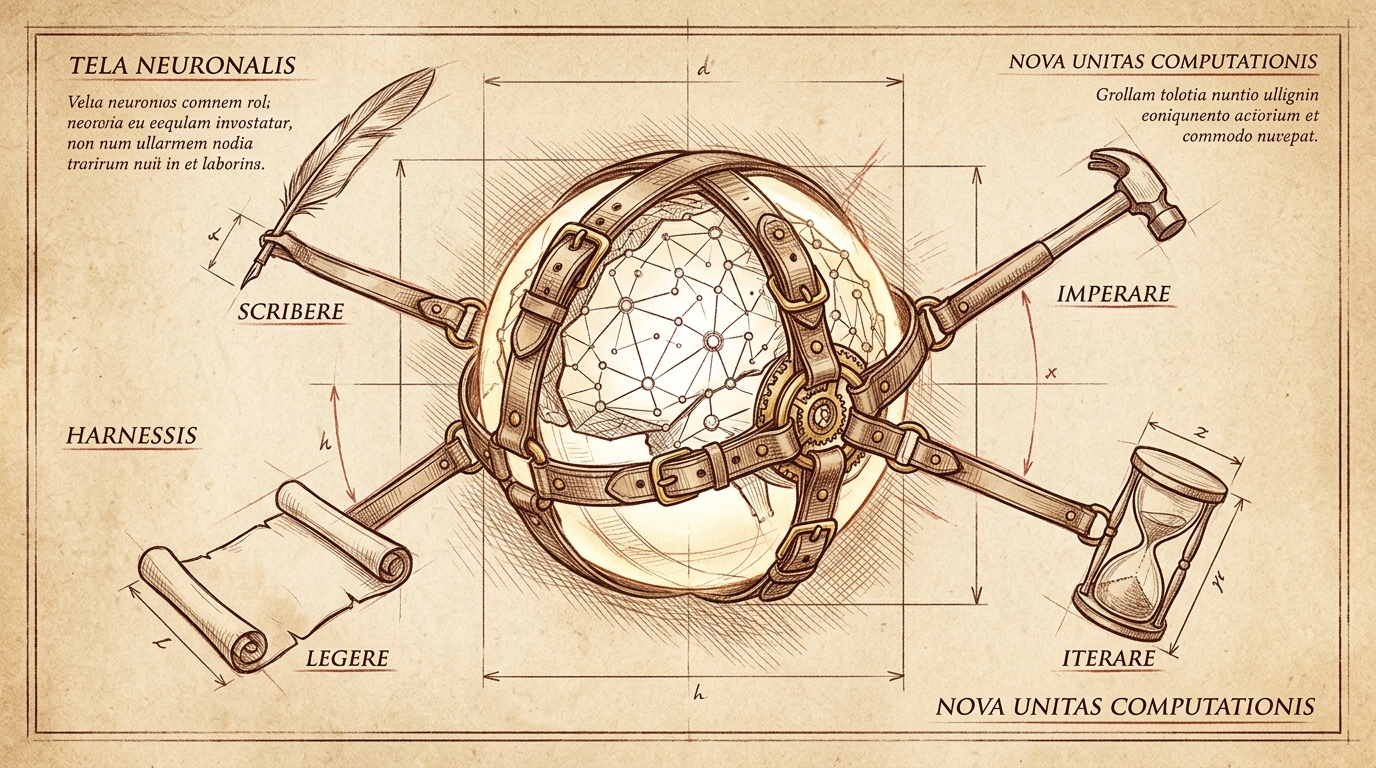
I'm on my second Claude Max plan. Are we going to go for three? Tokens are the bill for running a new native unit of computing. The harness is to neural nets what the compiler is to source code.
-
Laddering up from chatboxes to autonomy
Most companies want to go from scattered ChatGPT use directly to agents and autonomy. The middle layers — the ones where deployments either become real or die — get skipped in the planning.
-
Building an Intelligent Organization
From AI pilots to production systems — how we help leadership move up the maturity curve with principal-led engagements.
-
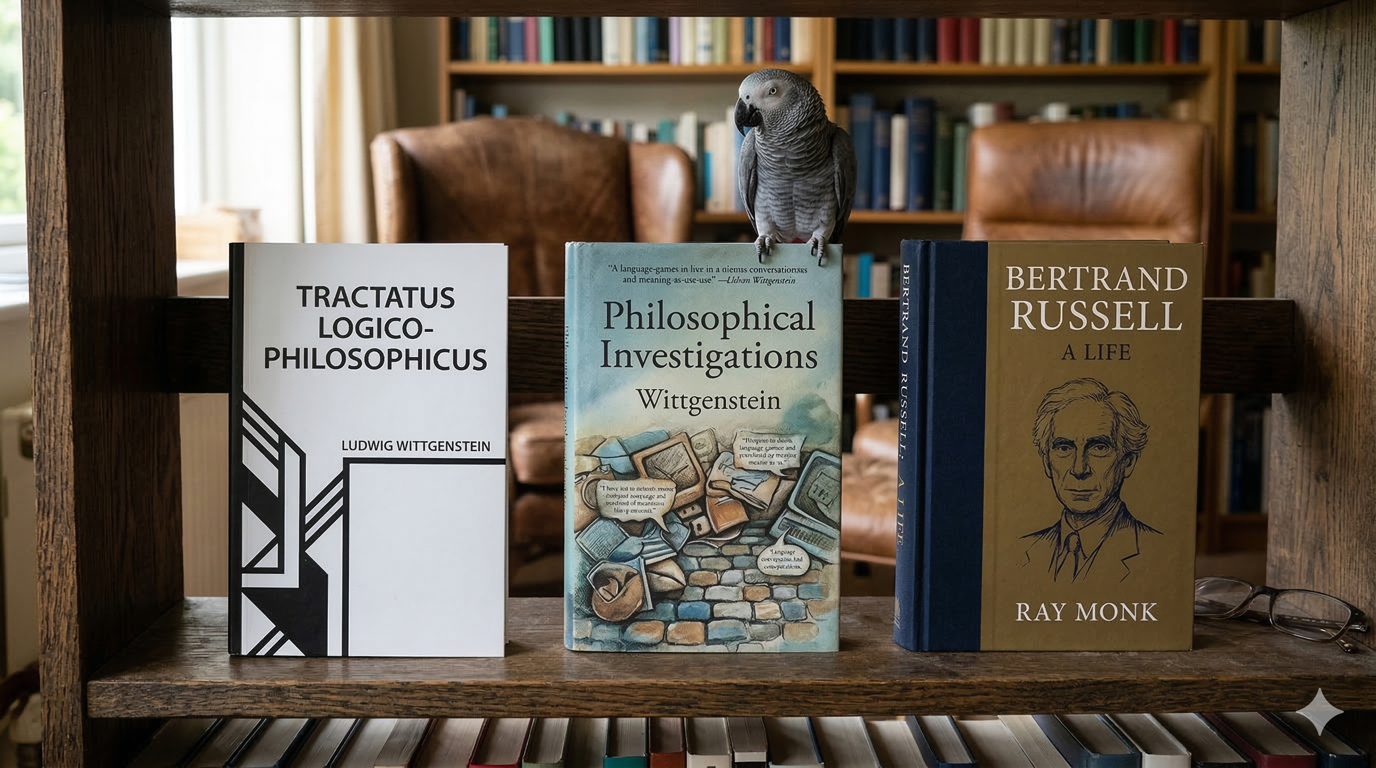
Sraffa's Gesture, the Crack in the Crystal, and Why the Stochastic Parrot Still Bites
Wittgenstein's shift from the Tractatus to the Philosophical Investigations—triggered by Sraffa's Neapolitan gesture—reframes the stochastic parrot debate. The danger isn't that LLMs lack secret understanding. It's our willingness to treat fluent simulation as the real thing.
-
The Agent Habitat
An agent isn't just automation with LLM calls. It carries state, accumulates memory, and makes bounded decisions under uncertainty — and a git repo is where all of that lives.
-
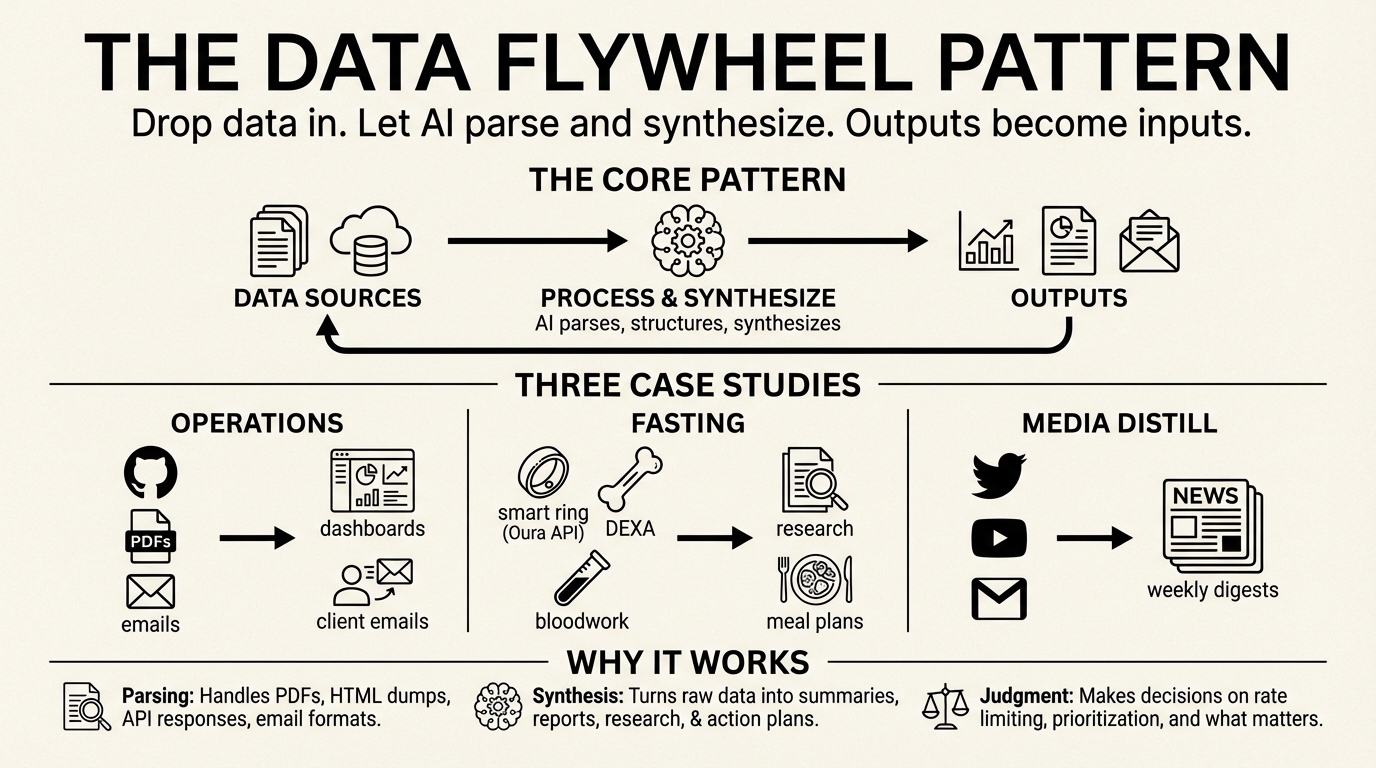
The Data Flywheel Pattern
Build applications by dropping in data and letting AI handle parsing, structuring, and synthesis. Three case studies.
-
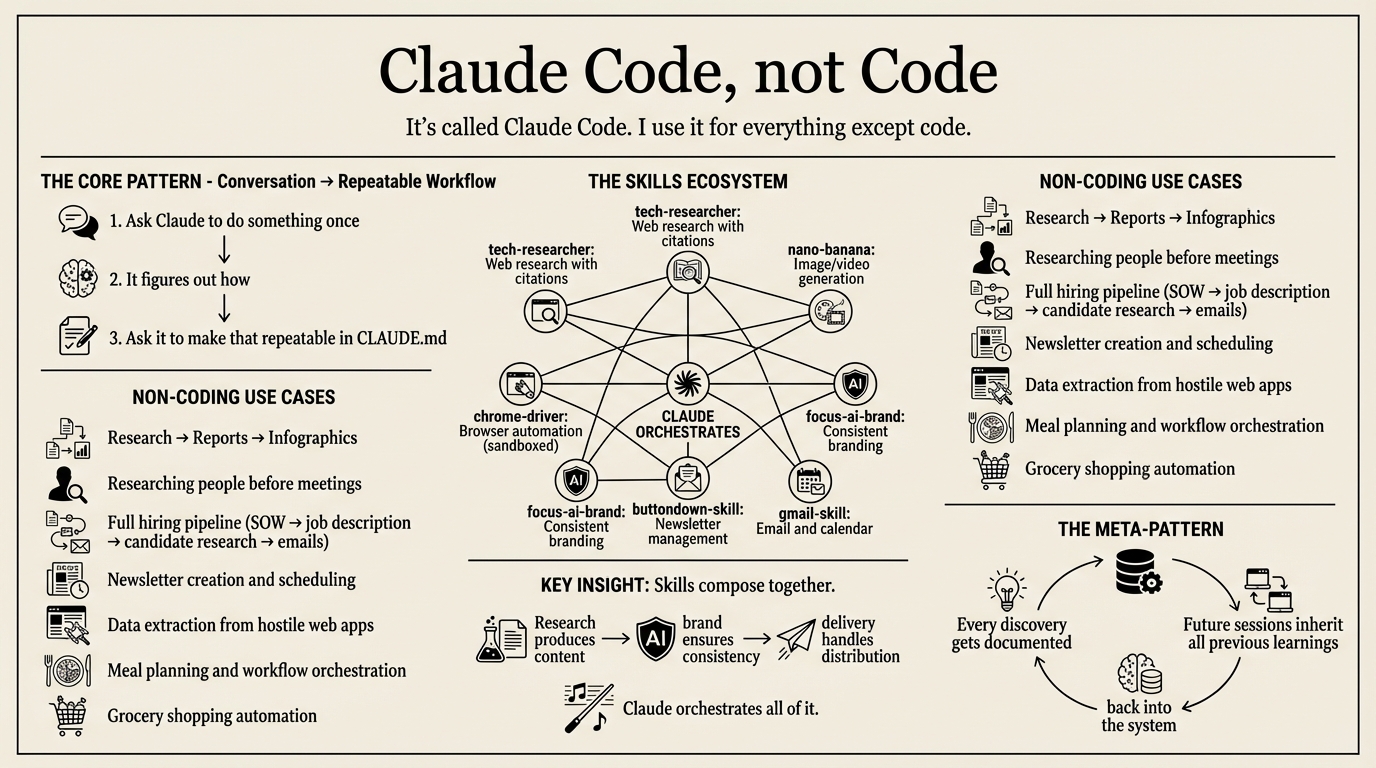
Claude Code, not Code
The real power of Claude Code isn't writing software—it's orchestrating skills for research, newsletters, browser automation, and turning one-off requests into repeatable workflows.
-
How AI in January 2026
We're at the beginning of infinity. In geological time this is all happening in an instant — and 2026 might be the best year to be alive.
-
"You're absolutely right" and other AI warning signs
When your AI assistant starts agreeing with everything, you've hit the dumb zone. Practical techniques for managing context windows and keeping AI useful.
-
AI tools fail loudly where humans failed quietly
AI coding tools don't work well in messy codebases. The fix is doing what should have been done all along - and that's good for everyone.
-
AI Engineering Summit 2025: Bash-Pilled and Building for Everyone
The models got smart. The tools got simple. The circle of who builds is expanding.
-
gpt5 is smarter than you are
gpt5 can choose to be so smart it's almost impossible to judge. Lets see how it does on some unanswerable questions and if it can totally replace google.
-
gpt-5 and gpt-oss
OpenAI’s GPT-5 launch stole headlines, but GPT-OSS quietly made local AI a lot more practical. This post covers what’s new, how to run it with Ollama or LM Studio, and why context size can change your results.
-
Technical Debt and the ROI Threshold
With agents now able to read and refactor code, the future cost of messy code -- and the current costs of unwritten code -- is shrinking. Code is more disposable and experimentation more rewarding.
-
Don't be passive aggressive with your agents
Treat your coding agents as adaptable collaborators—communicate clearly, value efficiency over endurance, match tools to your workflow, skip unnecessary formality, rethink technical debt, and document your development rules for best results.
-
Feature Development on the go
What happens when you challenge Google Jules, OpenAI Codex, and Cursor to build a PWA—using just your phone? Find out which agent delivered.
-
Geo-affordance
Imagine having Sherlock Holmes’ legendary eye for detail—AI now makes that possible for all of us. Is this AI changing us? It will alter our expectations and the risks of everyday digital life.
-
Report from Microsoft Build 2025
Microsoft is betting big on an open, agent-powered web—where protocols like MCP, A2A, and NLWeb redefine how AI and services interact. The real opportunity in AI isn’t just smarter models, but the “capability overhang” waiting to be unlocked by better reasoning and open standards.
-
Thoughts on gemini
Despite popular narratives about Google lagging in AI, their Gemini models reveal engineering excellence that's hard to ignore when you strip away the conservative product decisions and UI polish. From the lightweight yet powerful Gemma 3 to the multimodal capabilities of Gemini 2.5, Google's models demonstrate a level of speed, precision, and fundamental understanding that suggests they're not playing catch-up—they're just being cautious.
-
Moral Vibe Check
Technical correctness and meaningful insight: well-formatted, detailed AI responses can mask a fundamental lack of understanding—a "raving lunatic" hidden behind impressive form. Maybe P-doom is less about malice and more of making us intellectually poorer by substituting form for substance, facts for understanding, and technical accuracy for wisdom.
-
Agentic YOLO with Warp, Cursor, and Claude
What happens when you let AI help you think through and build your ideas, with minimal supervision and maximum trust? What does it mean to be a programmer? Are we closer or further from thought-stuff?
-
Clipboards are eating the world
The untold story of how your computer's clipboard sees itself as the essential bridge between humans and AI tools in the creative process. Through its eyes, we witness the journey of how digital projects come together through countless transfers between different AI services.
-
The New Touch Interface
The real killer apps of smartphones weren't the early games but became things like group chats and video calls that fundamentally changed how we communicate. Similarly, while we're currently amazed by AI's capabilities, we're still discovering how these tools will meaningfully integrate into our lives.
-
Tools for thinking. Everyday AI.
From building nuclear fusors to probing Vatican AI doctrine, this exploration reveals how AI tools are reshaping our daily intellectual work in surprisingly practical ways. Through examples of interfacing with databases, analyzing legal documents, and diving into deep research rabbit holes, we see how AI assistants are becoming intuitive research companions that expand our ability to quickly understand and synthesize complex information.
-
How I classify models
Small models are smart yet limited in knowledge; foundation models possess both deep understanding and extensive knowledge but lack structured problem-solving approaches. Educated models like DeepResearch excel by combining learned reasoning processes with large memory capacities, enabling them to adapt effectively to complex tasks while handling vast information instantaneously.
-
AI for research: DeepResearch a clear winner
Asking the tough questions: DeepResearch excels in depth and comprehensiveness, while o1, Sonnet 3.5, and DeepSeek with DeepThought provide comparable results for complex inquiries. Smaller models like phi4 and llama3.2 are deemed inadequate for intricate topics.
-
Learning on the go with NotebookLM
By utilizing NotebookLM, an AI model capable of generating audio summaries and interactive conversations, you can create customized podcasts on-the-go. You can also join the conversation.
-
Making hard things easier
Explore how generative AI-based tools can revolutionize the way we work, making creative tasks more accessible and efficient for both novices and experts, while also highlighting the importance of critical thinking and creativity in the face of automation.