What Surprised Us at the World's Fair
We read all 92 talk transcripts from the AI Engineer World's Fair 2026. The main report: what genuinely surprised us — with clips — plus six deep dives into the themes that mattered.
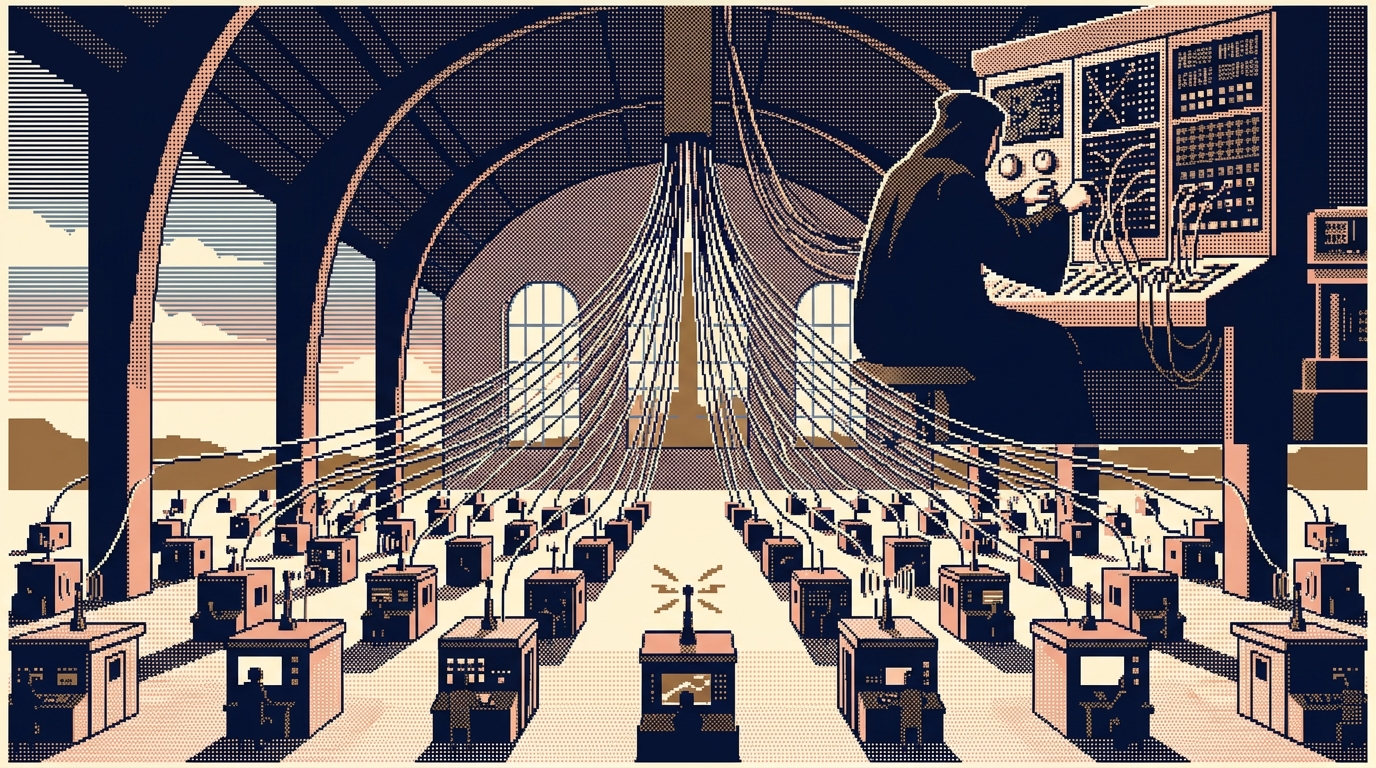
The AI Engineer World’s Fair ran in San Francisco in early June, and the talks have been landing on the @aiDotEngineer channel ever since — 95 of them by mid-July, a million combined views. Rather than sample it, we pulled transcripts for every talk and read the whole corpus (~319K words). The complete talk-by-talk roundup is bound as a Labs field report; this is the report of what actually surprised us.
Six deep dives follow through the issue — the bottleneck that moved, behavior over scale, files winning retrieval, the Miranda Hypothesis, agents talking to agents, and escaping skill hell. Watch the dispatch.
The one-sentence version
The field converged, from every direction and without coordination, on a single claim: the model is no longer the bottleneck — you are. The vendors said it from their own keynotes. The rest of the fair was working out the consequences.
Six genuine surprises
1. Token costs went up. StandardAgents claims per-token costs reversed their multi-year decline in 2026 — +29% intelligence-adjusted, +76% unadjusted. Every roadmap assumes ever-cheaper intelligence; if this holds, efficiency work stops being optional. The most consequential claim of the fair, and worth verifying independently.
2. A 4B model beat a 235B model. Snorkel used ~21 hours of RL, under $500 a run, to make a small model out-behave a giant one at financial tool-use. The giant model’s failure wasn’t reasoning — it queried a table that didn’t exist and then hallucinated, rather than checking what tables were available.
get_table_names — a tool the 235B model had too, and never chose to call · clip 14:45–16:253. The Miranda Hypothesis. The fair’s 58-minute sleeper (1.2K views): Hamilton-the-musical has generated so much text that it exceeds Alexander Hamilton’s documentary record by orders of magnitude in training corpora — so every frontier model’s “Hamilton” is a salience-weighted composite that, as the paper puts it, knows he will be the subject of a Broadway musical. Watch their instantiated Lincoln confidently give a fluent, modern, executive-power answer on war powers:
4. Anthropic deleted 80% of Claude Code’s system prompt. Smarter models want fewer examples — examples constrain imagination — and context instead of “do not” rules. The industry spent two years learning to write elaborate prompts; the frontier is now un-writing them.
5. Text diffusion self-corrects. DeepMind’s Gemini Diffusion picks its own step count — 4 denoising passes for 100 digits of pi, 31 for a quantum-mechanics paragraph — and visibly changed its answer mid-generation (60 → 49 → the correct 39) on a problem where GPT-4o and Gemini Flash both stayed wrong.
6. Candor was in fashion. Anthropic’s Thariq Shihipar spoke plainly about grief — “hand-coding is gone… the only way out is through” — and Tesco admitted their 94%-token-cut code index collapses to near-zero recall on large mixed-responsibility codebases. Vendors describing their own limits was the year’s quiet style shift.
And one for the road
Theo Browne’s argument that whole product categories have collapsed into “the markdown-file tier” — he replaced a PR-triage SaaS with a markdown file piped to a coding agent on a 9am cron:
The full roundup — all 92 talks with write-ups, grouped by topic, plus the complete index — is bound as Field Report FR-2026-07-AIEWF.