Department series
The Harness
How to work with agents day to day — memory, coordination, habitats.
Crosstalk
How agents talk — to each other, to your tools, and to the world outside the box. The humans move up a level.
- MCP grew a UI surface: the 2026-07-28 revision moved interactive widgets, tasks, and auth into negotiated extensions, with a stateless core so the USB port for agents can scale. — Agents Get a UI · Jul 30
- With A2A at v1.0 and MCP growing tasks and extensions, the protocols nearly rhyme by feature list — the real boundary is stance: MCP is a transparent workbench you compose, A2A is an opaque peer you delegate to. Choose the steps, or name the outcome. — Where A2A Begins and Ends · Aug 4
-
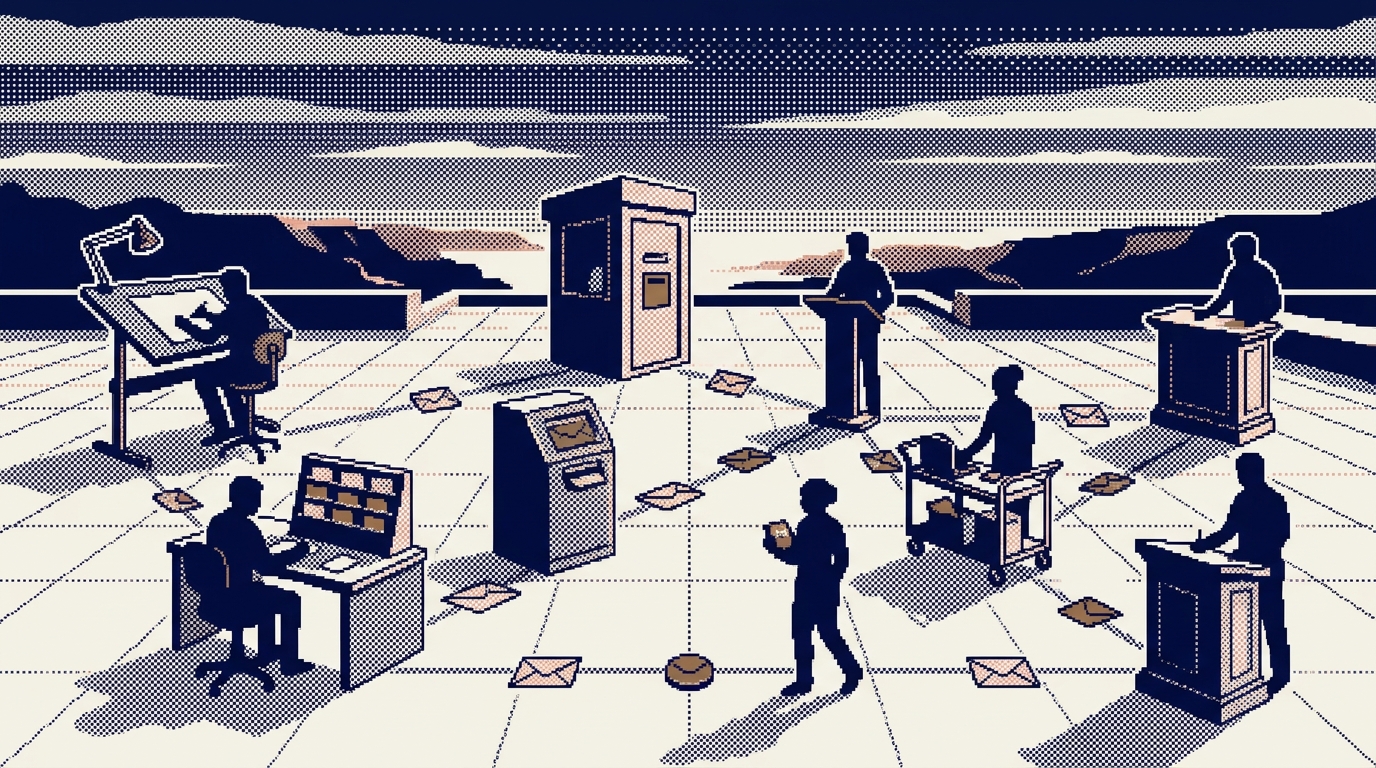
Where A2A Begins and Ends
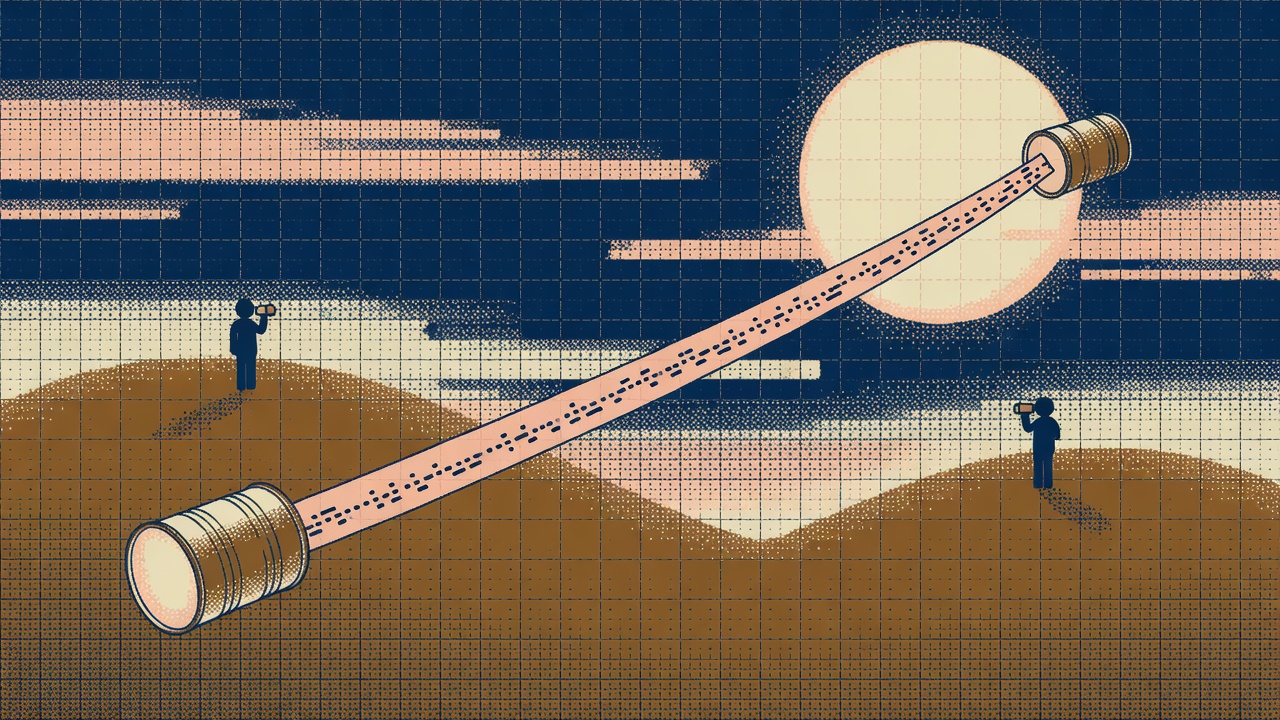
A2A hit v1.0 in April, and MCP's extension catalog made the two protocols look alike on paper. The actual boundary is stance: compose a transparent workbench, or delegate to an opaque peer.
-
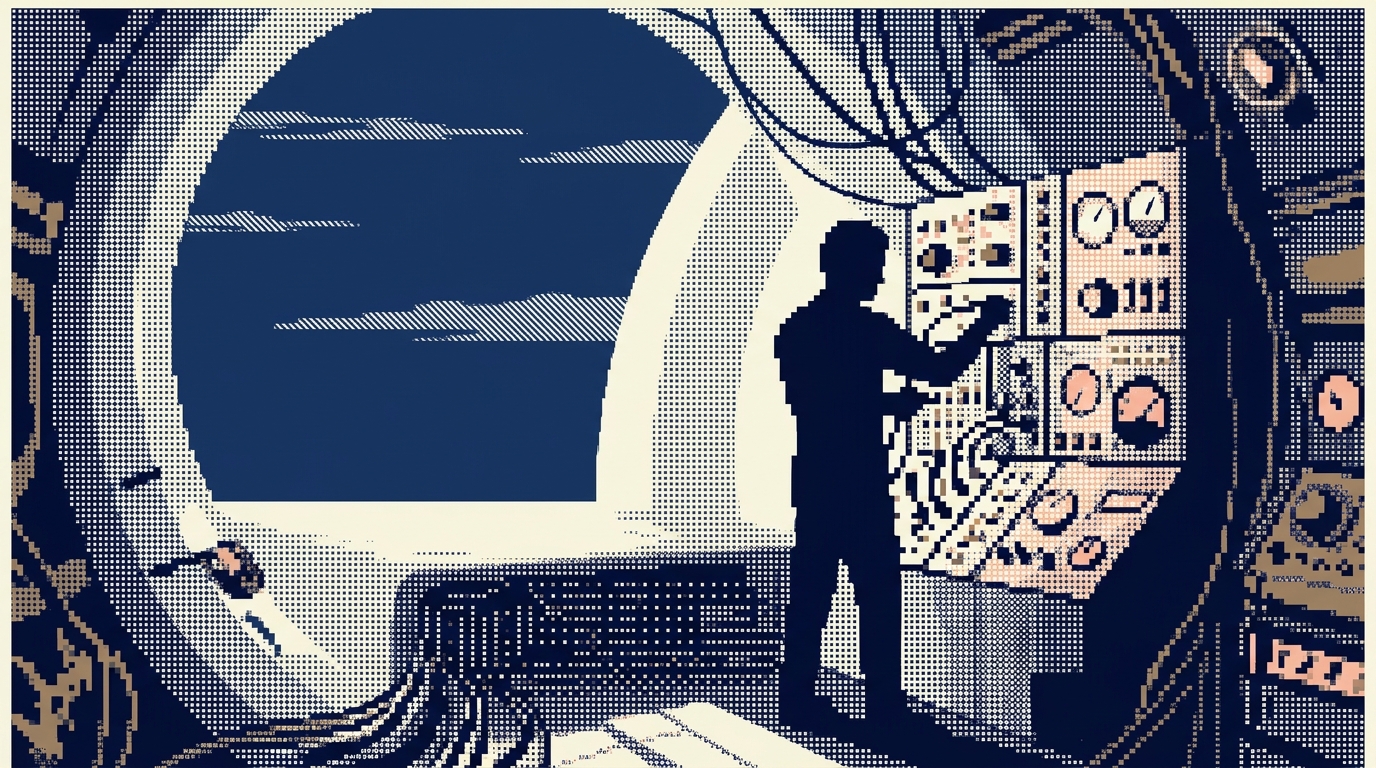
Agents Get a UI
MCP was the USB port for agents. The 2026-07-28 revision gives that port a screen, with host-mediated widgets in the chat, plus extensions for tasks, auth, and whatever comes next.
-
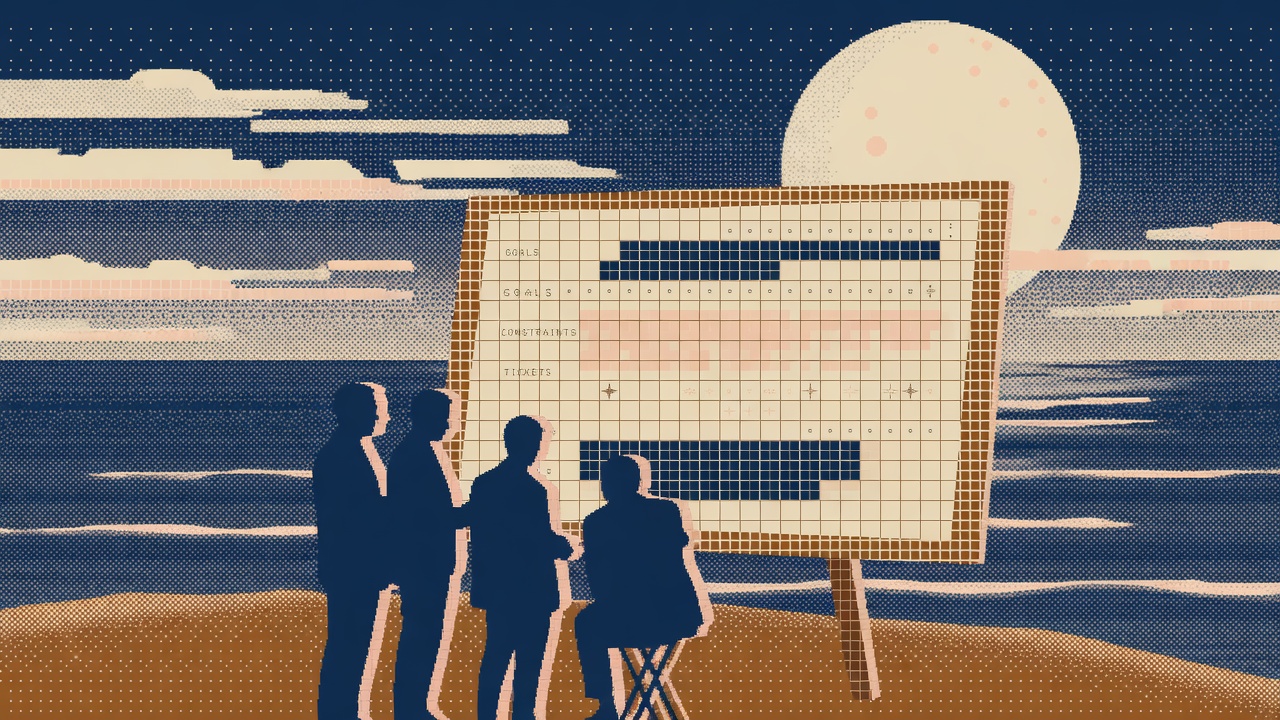
mattpocock/skills v1.1: coding with alignment surfaces
The v1.1 release is useful because it turns agent coding into a loop we can share: align, spec, ticket, build, verify — with Wayfinder for work too foggy for one session.
Dispatches
Filed from the floor — the patterns unfreeze in Miami, and the Linux moment arrives on the laptop.
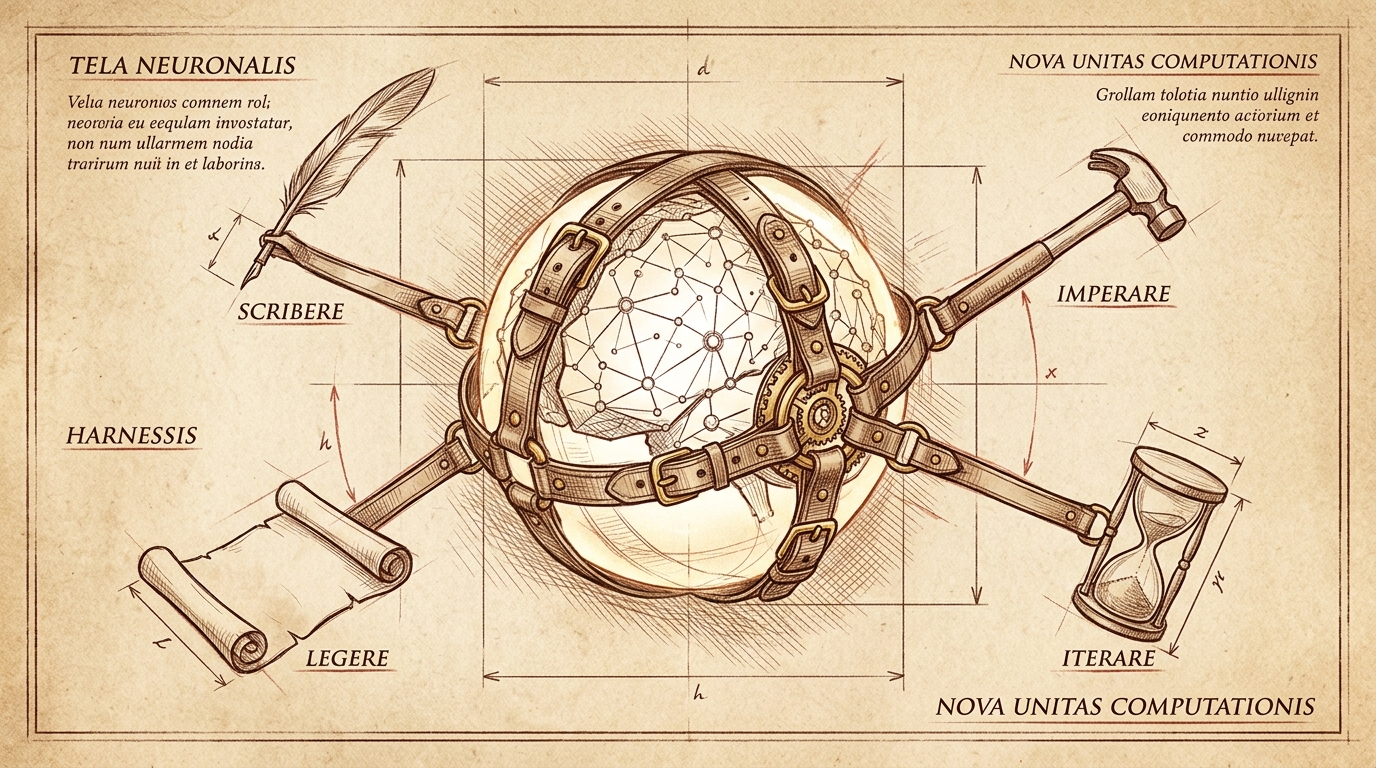
- The harness is to the neural net what the compiler was to source code — and the harness is open. — Neural Harness · May 1
Proofs
Show your work — 131 models, honest margins, and the thesis that it's agents all the way down.
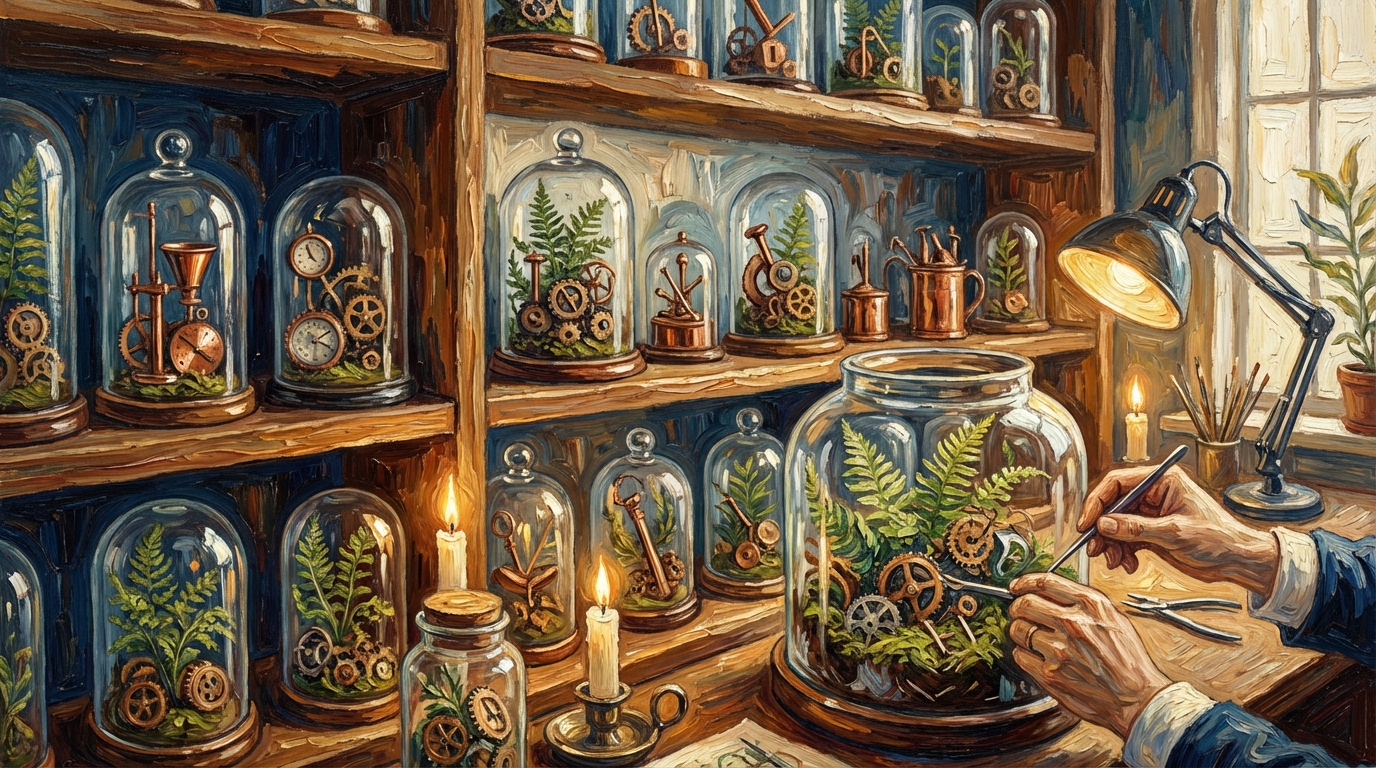
- Agents need habitats — state, memory, and bounded decisions, living in a git repo you can inspect. — The Agent Habitat · Feb 5
-
The Agent Habitat
An agent isn't just automation with LLM calls. It carries state, accumulates memory, and makes bounded decisions under uncertainty — and a git repo is where all of that lives.
-
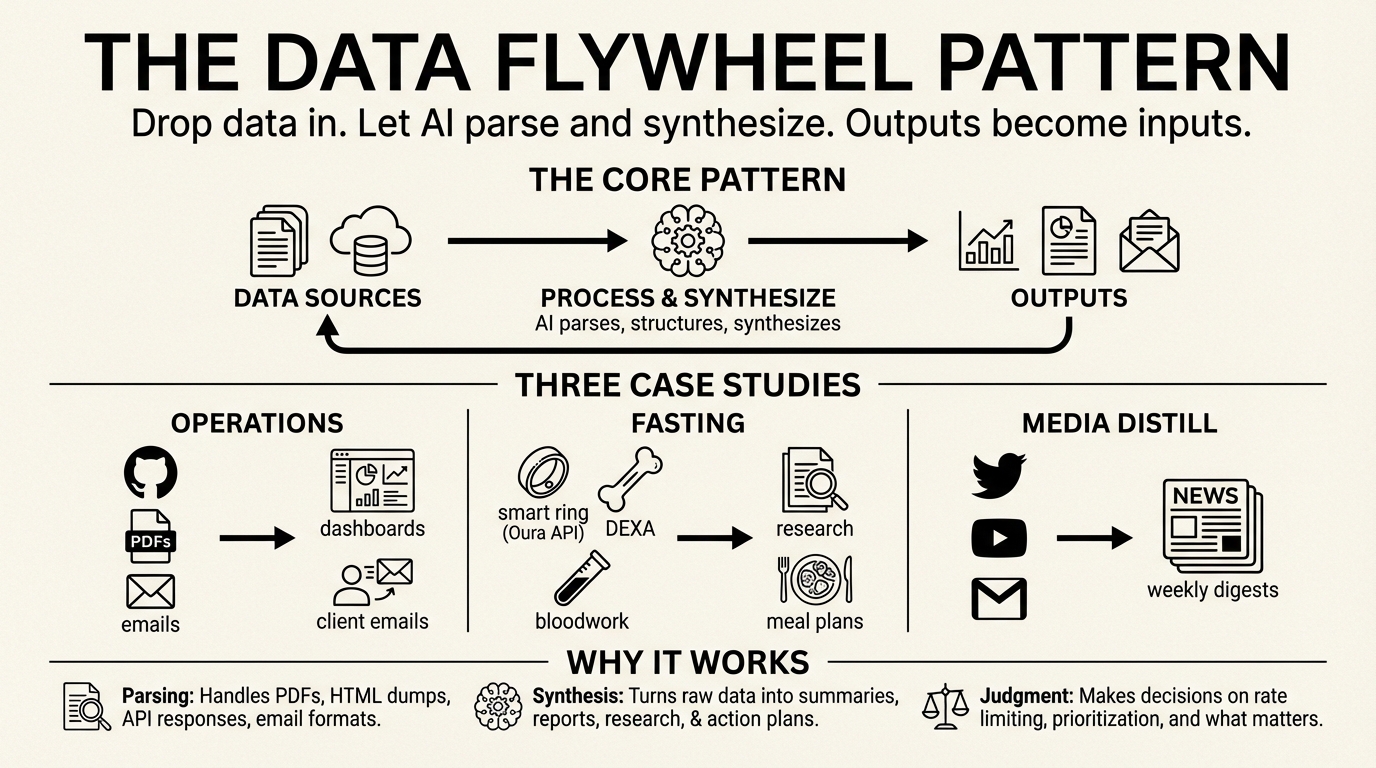
The Data Flywheel Pattern
Build applications by dropping in data and letting AI handle parsing, structuring, and synthesis. Three case studies.
-
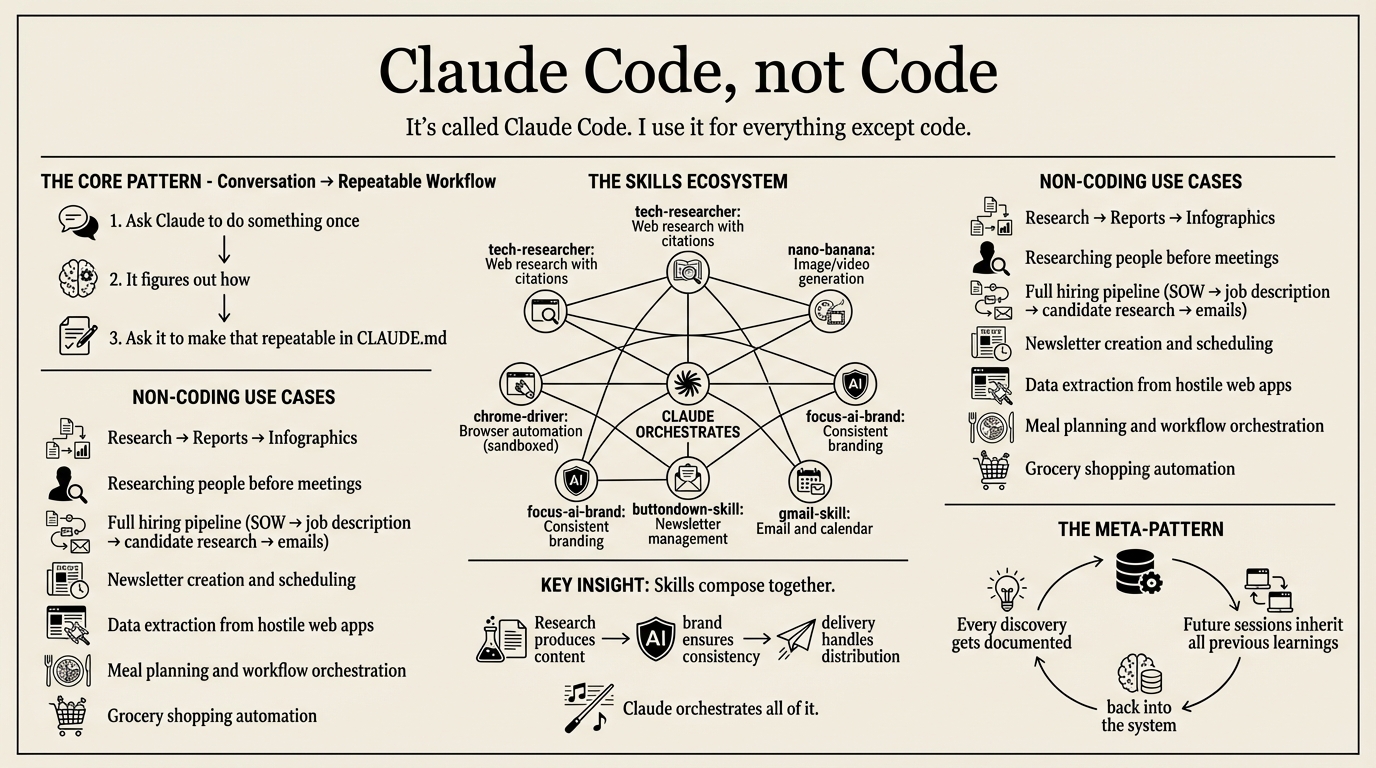
Claude Code, not Code
The real power of Claude Code isn't writing software—it's orchestrating skills for research, newsletters, browser automation, and turning one-off requests into repeatable workflows.
Instruments
Reading the gauges — before you trust an agent, you need instruments that show you when it's lying.
Field Trials
Take the tools outside and see what breaks — agents become products, and products can be raced.
- How you talk to an agent is an operational parameter — clarity and directness measurably change the work you get back. — Don't Be Passive-Aggressive with Your Agents · Jun 25

Blueprints
Drawing up the system — memory, MCP, structured output: the quarter the chat window stopped being the product.
- Memory is the missing organ: a file of project rules turns an agent from intern into colleague. — Coding with a Memory System · Mar 30